
Hi there fellow sleuths and members of the Kingscombe Secret Society.
There’s something delicious about a house that seems to watch you back, isn’t there? When I set out to write The Mystery of Mossington Manor, I knew the house couldn’t just be a setting—it had to be one of the main characters.
The South Hams district in Devon is famous for its rolling hills and “chocolate box” cottages, but if you look closer at the edges of the coastline, you’ll find the towering, salt-crusted Victorian skeletons that gave Mossington its bones.
Grab a cup of your favourite hot beverage, mind the draft from the window, and let’s tour the real-life inspirations behind the murder.
The Soul of a “Sleuth-Worthy” House
Why is it that we cozy mystery writers keep returning to the Victorian Gothic? To me, it’s the “little black dress” of the genre—timeless, elegant, and excellent at hiding a stain. A proper mystery house needs layers; it needs a face that looks respectable to the neighbors while harboring a dozen architectural “glitches” that allow for a midnight prowl.
When I began scouting locations in South Hams, I wasn’t looking for beauty. I was looking for character. I wanted stone that looked like it had witnessed a century of family arguments and kept every single one of them a secret.
The “Gable of Gloom”: Inspiration #1
One of my primary inspirations sits just outside Salcombe. It’s a crumbling manor that the locals usually ignore, but I couldn’t pull my eyes away from its roofline.
The house features these incredibly steep gables and dormer windows that, in the right twilight, look exactly like hooded eyes peering over the hedges. In The Mystery of Mossington Manor, this became the “East Wing.”
When our amateur sleuth, Harmony Stone, first arrives, she remarks that the house doesn’t just have a view—it has a gaze.
It was those specific, sharp Victorian angles that dictated where the first victim would be found; after all, a room with a window that high is the perfect place for a secret to fall from.
Secret Passages: Inspiration #2
Victorian houses were built on a foundation of “Upstairs/Downstairs” tension. During my research at several Devon estates, I became fascinated by the service corridors. These were the narrow, windowless veins of the house that allowed staff to move invisibly.
And this led inevitably, to the smugglers’ tunnel… or is there more than one?
The Garden of Forgotten Grudges: #3
A South Hams manor is nothing without its grounds. The coastal air does something wild to Victorian “pleasure gardens”—it turns them into beautiful, tangled labyrinths. I spent hours walking through overgrown estates where the wind off the English Channel whistles through the stone pines.
I paid special attention to the botanicals.
In the book, the garden isn’t just for show; it’s a pharmacy. The South Hams soil is perfect for Foxglove and Monkshood, plants that are stunning to look at but carry a deadly punch if brewed into the wrong tea.
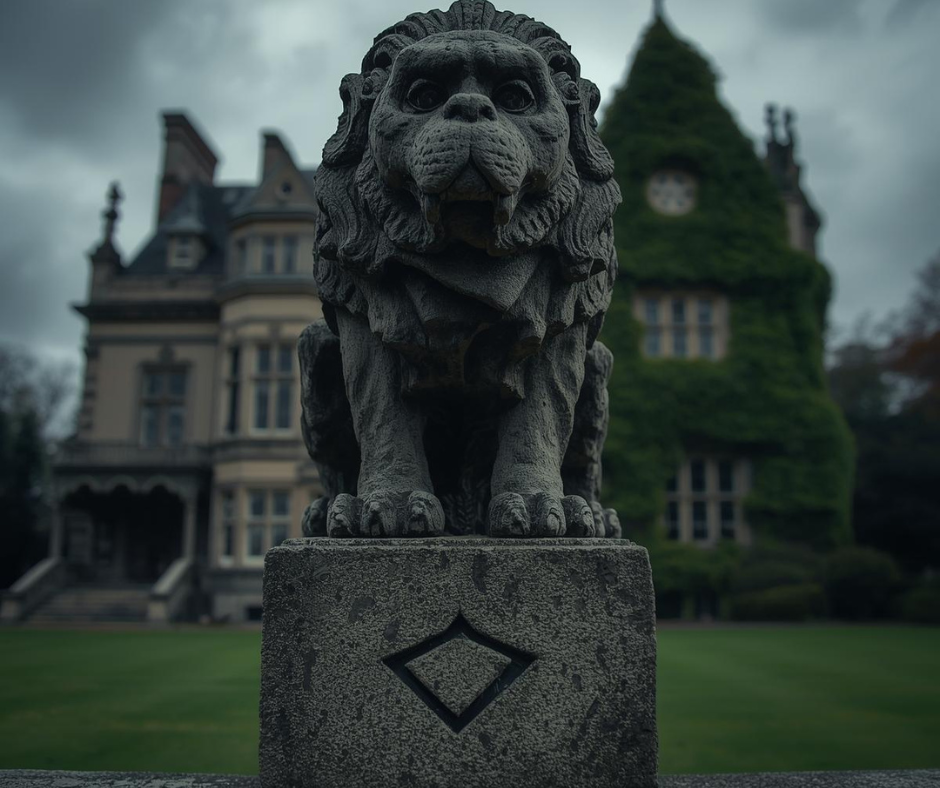
I wanted the exterior of Mossington to feel just as strange as the interior, using turrets and gargoyles and a hidden stone circle nearby, to ensure the mystery was as shrouded in mist as the bleakest of Devon’s moors.
Your Turn to Snoop
Bringing Mossington Manor to life was a process of taking a tour around the house with Harmony, as she meets suspects to a murder round every corner!
A house is only as haunted as the people living in it, but a good Victorian manor certainly provides the perfect stage for their shadows.